In this short video, Chairman Gordon Cairns reflects on how our Foundation has been helping young people achieve in education for the past five years.
Once again this year we saw that when given access to education children can thrive and turn this into opportunity. In this report you will find stories of young people succeeding.
Such stories convince us that the Origin Foundation's focus on education is making a difference.
The Foundation has a corpus provided by Origin, with total investment income from this corpus distributed to our community partners. The running costs of the Foundation are met by Origin Energy, to maximise the amount available for distribution.
| Grants Program | $2.44m |
|---|---|
| Give Time | $0.42m |
| Give2 | $0.31m |
| Total: | $3.17m |
| Grants Program | $12.33m |
|---|---|
| Give Time | $1.23m |
| Give2 | $1.21m |
| Total: | $14.77m |
As we look ahead to a period of low investment returns we recognise that to achieve maximum impact from the financial resources available we need to tighten our focus.
 Head of Foundation Sean Barrett
| Science, technology, engineering and maths education | Equality of educational opportunity | A stronger community sector | Employee engagement | |
|---|---|---|---|---|
| Goal | Facilitate greater gender diversity in STEM education. The objective is to increase the talent pool of engineers. Specifically to increase the number of females entering engineering subjects. | Support educational attainment by children marginalised because they are Indigenous, or live in rural and remote areas. | Increase the professionalism and productivity of the Not-for-Profit sector through provision of training and development. | To facilitate engagement in community by Origin employees. |
| Rationale | The Chief Scientist has nominated STEM as critical to future social and economic success. He has also pointed out the alarming decline in females participating in STEM. | The Productivity Commission in its report on Deep and Persistent Disadvantage pointed out these two areas. Educational attainment is the key to the future prospects of all children. | Aligns with the Federal Government's strategy for a stronger NFP sector, and community business partnerships. Also aligns with the Community Council of Australia's agenda for creating a more robust sector. | Research indicates that employees who are engaged in charitable and community work through their employer are happier, more productive, and loyal. Skilled volunteering is essential to our Engaged Philanthropy model. |
None of these areas are entirely new to the Foundation. We are building on previous experience and paying due regard to the community's emerging future priorities.
For the last three years we have been funding the development by The Smith Family of Let's Count - an early childhood program to introduce children to maths concepts. Evaluation of the program has shown children master and enjoy the subject if given the opportunity.
We have long believed that educational opportunity should be available to all children. More than 20% of our grant funding goes towards Indigenous education programs. More than 40% of our funding is directed at programs operating in rural and regional Australia.
We have funded more than 100 scholarships for current and future leaders in the Not-for-Profit sector over the past four years. We are funding research by the Centre for Social Impact which we hope will demonstrate the positive impact of continuing education and training and shift attitudes within the sector and among funders.
The Foundation facilitates community engagement by Origin's people. Through our matched-giving scheme, more than half a million dollars a year goes to a range of charities. Skilled volunteering by Origin people is essential to our Engaged Philanthropy model, and our research shows it delivers worthwhile benefits to our community partners.
We will continue to seek out and support organisations with evidence-based solutions to the challenges in these focus areas. We have commissioned research from recognised academics and researchers to help us better understand these challenges.
Our shift in focus will be evolutionary and take time. We will fulfil all our current commitments to partners even if they do not fit within these new focus areas.
At the end of the day, we remain committed to creating opportunity for young Australians.
Since our inception in 2010 we have gifted more than $12 million through our Grants Program, to help Australians reach their potential through education. We are providing help in the following ways:
The importance of education in early childhood is well recognised. Research shows a good education early in life provides a solid foundation for future achievement. It also improves health and wellbeing well into adulthood. Through our support of Good Beginnings, Mission Australia and The Smith Family, we've helped more than 1,000 young children get the best start in life.
In Australia's most disadvantaged communities, one in four children does not have the numeracy skills they need to start school. A child's mathematics skills are predictive of their later mathematics learning and achievement. Children who start ahead in maths generally stay ahead, and those who start behind generally stay behind.
Let's Count is an early mathematics program, created by The Smith Family, to help children from disadvantaged backgrounds develop mathematics skills in their pre-school years. Facilitated by early childhood educators, the program helps parents and carers to build their own confidence in maths, and promote positive maths experiences for their children. It provides fun, practical and engaging ways to notice, explore and discuss maths in everyday family life.
Following a successful pilot in 2011, the program was expanded to 27 disadvantaged communities around Australia, with funding from our Foundation. As part of this expansion, an evaluation of the program was undertaken. Results show that Let's Count has positively impacted on the children, parents and educators who participated. It shows that children who undertake the program are achieving to a significantly greater level than their peers who were not involved in the program, particularly in the most complex tasks.
In Australia’s most disadvantaged communities, 1 in 4 children does not have the numeracy skills they need to start school.
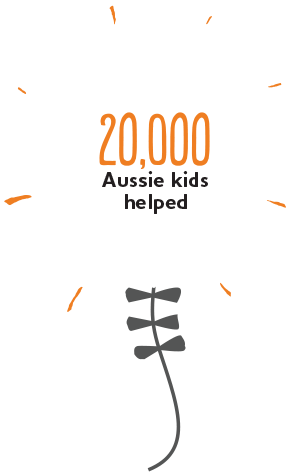
Students learn best when the subject matter being taught is interesting. Through our partnerships we have helped more than 20,000 students engage with learning.
According to a recent OECD report, Measuring Innovation in Education, "the ability to measure innovation is essential to an improvement strategy in education". Yet it found that most new initiatives around the world are being tried but not evaluated. "Measuring policy impact more rigourously and consistently will not only be cost-effective in the long run, but is also essential for developing the most useful, practical and successful education policy options", it said.
The OECD report coincides with the publication of a three-year study into the effectiveness of the Big Picture model of schooling in Australia.
Big Picture is a different design for school, which still gets students through the numeracy and literacy syllabus. They build curriculums based around the child's area of interest, involvement from parents and making connections within communities where young people can also learn away from school.
The three year longitudinal study, funded by our Foundation, shows this personalised learning is helping disengaged students to not only finish year 12 but successfully go on to further learning and careers.
Conducted by Sydney and Murdoch Universities, the research shows that by doing school differently and reshaping the classroom, Big Picture schools and students are far more engaged, have higher academic performance, higher attendance rates and higher family involvement.
Research tells us that teachers have a huge impact on how well students learn. Students who get the best equipped teachers learn most and thrive. Helping teachers to reach their potential is key to student success.
To date we have supported the development of more than 3,500 teachers across a range of programs.
QUT's Exceptional Teachers for Disadvantaged Schools program takes the brightest student teachers and trains them to survive and prosper in the most challenging schools. So far they have graduated 87 new teachers and almost 90% of them are working in the Queensland schools which need them the most.
With a $2 million grant from our Foundation, QUT is taking their program to universities around Australia, including the universities of Newcastle, New England, South Australia and Deakin, with more to come in future years.
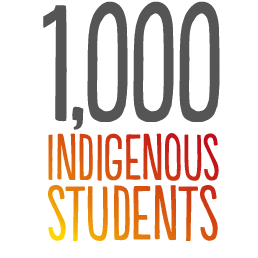
Indigenous students achieve in education at lower rates than their non-Indigenous peers. Working with the Australian Indigenous Mentoring Experience (AIME), Indi Kindi, Cape York Aboriginal Australian Academy and Gawura, we are supporting programs that close the education gap for Indigenous children.
To date we have helped over 1,000 Indigenous students achieve their potential.
Through their mentoring program, AIME supports Indigenous students through high school at the same rate as the general population.
An independent economic evaluation conducted by KPMG found that AIME students performed better than Indigenous students around the country, and reached levels of school performance close to their non-Indigenous peers.
The report also found that AIME contributed $38 million to the Australian economy in 2012. For each $1 spent on the program, $7 in benefits was generated for the economy.
There are significantly more barriers to attaining an education for students living in rural and regional Australia than those living in metropolitan areas.
There is also far less opportunities open to rural and regional based students than their metropolitan counterparts.
Through our partnerships with the Country Education Foundation and the Foundation for Rural and Regional Renewal, we've helped almost 13,000 rural and regional students achieve.
Teachers play a significant role in our children's education, but given schools only have kids for around 18% of their lives between kindergarten and high school, it is parents who are still the biggest influence on a child's educational success.
When parents are engaged with their child's education, regardless of background or income, children generally have better learning outcomes.
Many of our Grant Program partners are working to better equip parents with the skills and tools they need to improve education success for their children, but parents who are juggling busy family and work lives often need support, too.
We recognised that many parents and care-givers at Origin would value the education-related expertise of our Grant Program partners, and so we created a program to share some of this knowledge with them.
Working together with The Smith Family and taking the learnings from their Let's Count program, we developed a workshop for Origin parents, to help them find fun and practical ways to integrate maths concepts into everyday life. Just like early literacy skills, having a basic understanding of maths concepts is critical for success at school.
Origin Operations Manager and father-of-two, Matthew Walsh, said "the program made me realise that numbers, shapes and colours can be taught anywhere. Now when we are in the supermarket, park or in the car we really focus on these things with the kids and they are finding it really enjoyable."
We also ran a series of seminars on the topic of 'what makes a good school', led by education expert and Big Picture director, Chris Bonnor AM. In these sessions Chris addressed many long-held beliefs about schools and provided practical tips on how to choose the right one for your child.
We are proud to support a range of scholarships that help young Australians reach their potential, including the prestigious General Sir John Monash Awards.
With the Origin Foundation scholarship in engineering, we're helping some of Australia's most promising young scientists, engineers and Australia's future leaders reach their educational goals.
Australia's Not-For-Profit sector is extensive and operates across most aspects of our communities, providing services and support that are complicated and diverse.
However, there is often little appetite from funders to help the sector improve its performance. And as many organisations in the sector have been established for a community purpose, any improvements to efficiency, effectiveness or funding of the sector could lead to wide-ranging and far-reaching benefits to the whole of the Australian community.
We are helping Australia’s Not-For-Profit sector progress in a number of ways:
With fully paid volunteer leave, Origin employees donate their time and professional skills to help our Foundation partners.
In 2014, 758 employees gave 4,965 hours to a wide variety of projects, including helping young Indigenous children with their reading, hosting high school industry visits, assisting with bushfire recovery efforts, renovating a rooftop playground, and providing mentoring for disadvantaged teenagers.
In the 2013/14 London Benchmark Group (LBG) reporting period, Origin achieved above benchmark participation in volunteering with 13.8% of Origin employees giving their time, against the LBG average of 12.8%.
Origin environmental scientists and engineers helped bring science classes to life
Through payroll deductions and fundraising, Origin employees give to the charities closest to their hearts and our Foundation matches their donations dollar for dollar.
Thanks to the generosity of Origin's employees, more than $600,000 went to Australian charities in 2014. Employees gave to over 90 different organisations, supporting causes such as cancer research, men's health, and sustainable solutions to poverty.
Against the LBG group average of 3.5%, Origin achieved 3.3% participation for payroll giving alone, with many more employees donating via fundraising events.
Across the Origin business a network of committed individuals give their time and support to help facilitate activities and advocate on behalf of our Foundation. Thank you to our Foundation Champions for your support in 2014:
Amanda Pollard
Adam Evangelista
Alan Noble
Alice Craven
Andres Aronsohn
Angela Turnour
Annie Giang
Basia Wronski
Ben St Clair
Caitlin Ingle
Catalina Cortes
Catherine Wisniowski
Chathu Gamage
Claudia Rodriquez-Larrain
Courtney Wilson
Danielle Seaton
Darren Bailey
David Leek
Dee Craig
Emily Ho
Erica Bayley
Erin Parnell
Fiona Doherty
Fran Lawson
Frances Pryke
Gabrielle Bibby
Giovanna Volpe
Helen Ewing
Helena Lo
Hollie Walls
Hui Bee Low
Huiling Zhu
Ian Baldwin
Illiyah Habib
Jamie Rositano
Jenny Dunn
Jody Coker
Jody Webb
Jordaine Chattaway
Josephine Peachey
Justine Summers
Kain Pollard
Karen Broder
Karen Townsend
Katrina Nagle
Kellie-Anne Currie
Kelly Bevan
Kiera Canavan
Kimberley Selby-Fullgrabe
Krystin Dudley
Lee-Anne Johnstone
Louise Ratchford
Mandy Dunstan
Mario Maratos
Maryanne Thomas
Melanie Barr
Melissa Monga
Melissa Townsend
Quang Ho
Reannon Ryan
Rebecca Clive
Rebecca Martin
Rita Vigh
Robyn Cannizzaro
Roshan Ramoo
Ruzica Baric
Sally Owen
Sarah Priest
Sarah Tabuteau
Sarah Tilby
Shari Rankin
Sonya Keeble
Soumya Munagala
Sunny Katyal
Talia Barnes
Tammy Anne Girgis
Tara Knight
Thomas Gay
Tiffany Redgrave
Tina Wolff
Trish Butterworth
Trudi Webster